Section for English-speaking teachers and students

  • Welcome to a course designed to support you in teaching sustainability at our university. We have prepared a range of topics and teaching activities for you—some are suitable for e-learning courses, while others are better suited to face-to-face teaching. All materials were developed at VŠE as part of the GD SEED project and are freely available to all teaching staff at our university.
    If you wish to import any of the materials (podcasts, case studies, videos, etc.) into your own courses, please proceed with the utmost care to ensure that the content of this course remains unchanged. If necessary, contact the LMS Moodle methodologist Marta Suchá marta.sucha@vse.cz

  • Jean Tirole 

    Lecture: The Political Economy of Climate Change (Forum 2021)


    French professor of economics at the Toulouse School of Economics, Jean Marcel Tirole, was born on August 9, 1953, in the city of Troyes.

    Jean Tirole is currently among the most influential economists. He is the 8th most cited economist in the world and works in the fields of microeconomics and macroeconomics, game theory, and financial crises. He focuses on liquidity, public procurement theory, and also has an interest in psychology. He was awarded the so-called Nobel Prize in 2014, at the age of 61, for his analysis of market behavior and industrial organization, particularly monopolistic and oligopolistic players. He clarified how markets dominated by a small number of powerful firms function and how they can be regulated (e.g. in telecommunications, energy, and banking).

  •  

    Al Gore: Why climate action is unstoppable and "climate realism" is a myth - video

    Video length: 24 minutes

    Questions related to the video:

    • What is Al Gore’s main argument?

    • Which data or facts from his speech had the strongest impact on you?

    • How do you interpret his strongly critical tone?

    • What is the video’s call to action (CTA)? In other words, what are we expected to do based on the information presented in the video?

  •  
    Three tricks for designing change that people will accept – 2-minute video + development of recommendations for a selected organization (60 minutes)
    Assignment: Based on the three recommendations mentioned, evaluate the activities of an independently selected organization (NGO, company, or public authority) in the area of environmental protection, green innovations, etc.
     
  • Case study: The transformation of Ørsted from “black” energy to green energy

    Time: approx. 10 minutes of reading + time for analysis

    Study materials: available HERE

    Reflection questions:

    • What initiated Ørsted’s transformation?

    • What do you think the board of directors’ discussions looked like when deciding on the company’s new strategic direction?

  • Video for use in teaching: Degrowth

    • What are the ideal roles of grassroots and top-down action?
    • Who are the agents of change in postgrowth transformations?
    • Which forms of direct action are effective, and morally legitimate? How do local and global struggles intersect with each other?

    Video Kate Raworth  60 min. + reflection 20min.

    Ecological economics and degrowth are often praised for having appealing theories and strong diagnoses of existing problems, while they have also been criticized for an alleged limited ability to formulate actionable policies and politics. Recent scholarship, activism, and practice in the field is however putting increasing attention into transformation strategies and tactics for postgrowth transitions. Questions raised include: What are the ideal roles of grassroots and top-down action? Who are the agents of change in postgrowth transformations? Which forms of direct action are effective, and morally legitimate? How do local and global struggles intersect with each other? This plenary focuses on the challenges of linking postgrowth theory and action, highlighting venues for transformation and practical engagement with the politics of social and environmental justice.

    Reflection task:

    • What are the three key ideas from this video?
    • Which of them resonate with you personally?
    • What one concrete action can you take based on these ideas?
  • How can I personally help address climate change?

    Venn diagrams for identifying a suitable activity.

    Time for the activity: approx. 20 minutes

    https://www.ayanaelizabeth.com/climatevenn

    Task: Complete the worksheet and try to identify your own role in addressing climate change.

  • Global Discovery of Business for Good: Innovations That Improve the World – Aim2Flourish Awards

    Inspirational website:
    https://aim2flourish.com/2025-flourish-prizes

    Aim2Flourish is a movement featuring innovative, purpose-driven projects focused on addressing the Sustainable Development Goals (SDGs).

    Task: Choose one of the 17 SDGs you would like to focus on and explore projects that have received awards over the past five years.

  • Course Explorations into Mindfulness

    Are you interested in mindfulness? In this course, students develop their understanding of mindfulness concepts and techniques. They also learn how to further cultivate focus and self-awareness and how to apply mindfulness practices in various situations.

    You can find the course here:   https://skills.yourlearning.ibm.com/activity/ILB-PZXNZVNYYRRQ2188

    Complete the course and gain the Build Explorations skills as part of the Mindfulness badge, co-created by IBM and the University of Oxford Mindfulness Centre.

  • Personal Roadmap to PhD

    Workshop offer by Honza Froněk

    Workshop for PhD students: 2 hours, minimum group size 8 participants

    Personal pathway to a successfully completed PhD:
    At several stations, you will create a visual map of your doctoral studies. Using coaching questions, you will clarify your desired end state, key milestones, competencies to be developed, and the key people who can support you. We will also focus on how your self-image supports or hinders your progress and motivation.
    This workshop will help you gain greater control over your doctoral journey.

    If you are interested in the workshop, please contact Jan Froněk: jan.fronek@vse.cz

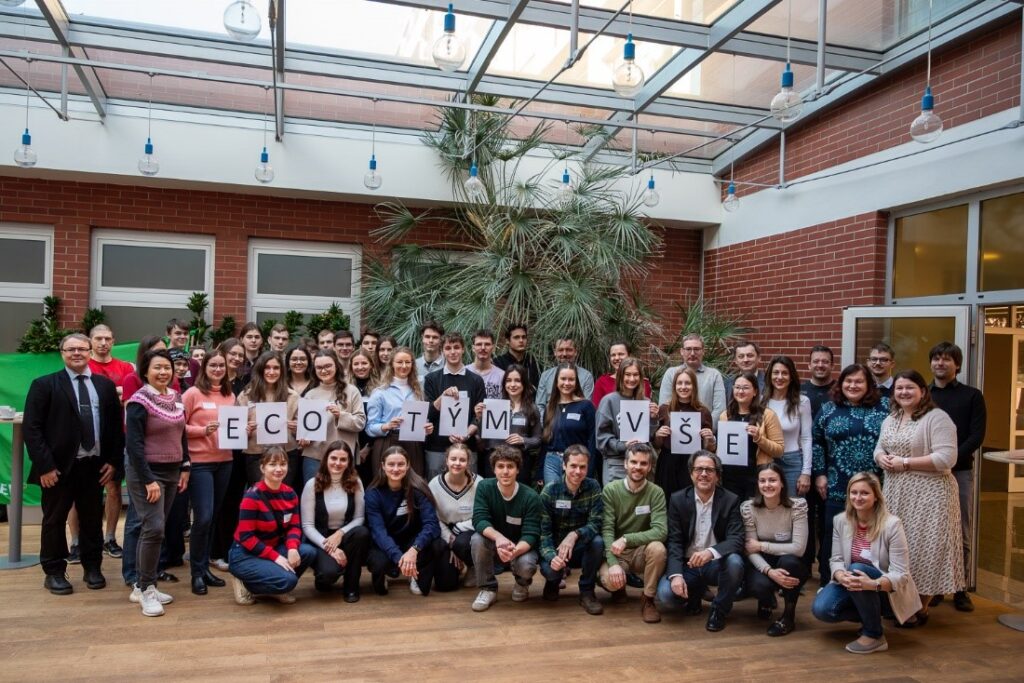
  • VŠE Eco Team


    VŠE Eco Team is a crew of students, staff, and partners who want our university to be greener and smarter at the same time 🌱💡. We act as an advisory brain for the leadership, run EcoCampus projects, and collaborate with partners from the Czech Republic and abroad – so boredom is definitely not on the menu.  https://eco.vse.cz/english/eco-team/

    Our mission:

    • Supporting sustainability: We come up with and implement ways to make VŠE more planet-friendly 🌍.
    • Communication & education: We show students and staff that ecology and social responsibility aren’t just buzzwords – they’re things we can actually change.
    • Partnerships & collaboration: We join forces with companies and organizations that also want a better world – because together, everything works better 
  • Get involved in the biodiversity sub-teams of the VŠE Eco Team
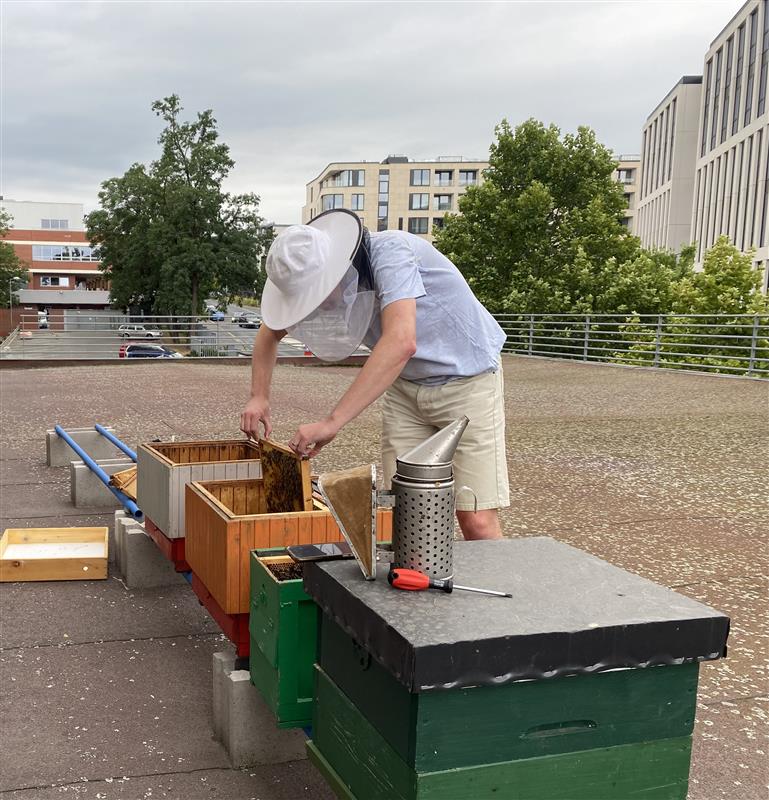
    The VŠE Eco Team is a group of students, employees, and partners who want our university to be greener and more sustainable 🌱💡.
    Biodiversity is the focus of two of our sub-teams:

    VŠEly – join the team that takes care of the VŠE bee colonies, learn how to keep bees, harvest honey, and use other bee products.

    Biodiversity – explore with us the diversity of nature around the VŠE campus and student residences, and help us support and develop it.

    Learn more at:
    https://eco.vse.cz/eco-tym-vse/